Ethics
I am going to level with you from the start. This article is about hunting. If you are vegetarian or vegan, I respect that completely. You have made a choice based on your values. This is about mine.
I hunt the deer I cook. I stalk them in the forests and fields of Sussex, I shoot them cleanly and humanely, I butcher them in my own prep space, and I cook them over fire at weddings, events, and workshops. From field to fork, the animal is in my hands the entire way. And I believe this is not just the most ethical way to source meat - it is the only way I can do what I do with a clear conscience.
Most people who eat meat have no idea what happens between the field and the supermarket shelf. And the industry prefers it that way. Neat plastic trays with a Union Jack sticker make it easy to forget that a living animal was involved.
I cannot forget. I do not want to. When I pull the trigger on a deer, I am fully aware of what I am doing. I have spent hours in the dark, in the cold, watching that animal through a scope. I know its habits, its routes, the field it feeds in. When the moment comes, it has to be clean. One shot. Instant. No suffering.
Compare that to the reality of intensive farming. Animals living in confined spaces. Transported long distances in lorries. Held in lairage awaiting slaughter. I have visited abattoirs. I have seen the stress in those animals. I am not saying all farming is bad - there are outstanding British farms that treat their animals with genuine respect. But the system as a whole? The anonymous supply chain that puts a £3 chicken on a supermarket shelf? That is the thing that should make people uncomfortable. Not a deer that lived wild and free until a single moment it never saw coming.
If you eat meat, someone, somewhere, killed an animal for you. The only question is whether that process was respectful, clean, and honest - or whether it happened behind closed doors in a system designed to stop you thinking about it.
- Cai
Here is the ecological reality. The UK has no natural predators for deer. No wolves, no lynx. The last one was hunted to extinction centuries ago. Without predation, deer populations explode. The British Deer Society estimates over 2 million deer in the UK - the highest level in 1,000 years.
Unmanaged deer destroy crops, strip bark from ancient woodland, damage conservation sites, and cause around 74,000 road traffic accidents per year. Deer management - responsible, licensed culling - is not a choice. It is a necessity for the health of the countryside. The question is what happens to the meat.
Historically, a staggering amount of culled deer was simply left in the field or buried. Meat from a wild, free-range animal - lean, nutritious, flavourful - going to waste because there was no market for it. That is changing, partly thanks to organisations like the Deer Stalking Certificate scheme and partly thanks to chefs like me who are building that market through events, workshops, and restaurants.
When you hunt, butcher, and cook your own meat, you develop a relationship with the ingredient that is impossible to achieve otherwise. I know exactly how old the animal was, what it was eating, where it lived, and what condition it was in. I can read the carcass and know which cuts will be tender and which need slow cooking. That knowledge informs every menu I write.
It also teaches patience. A deer stalk is not action-packed. It is hours of sitting quietly in the cold, observing. Waiting for the right animal. Waiting for the right moment. Most stalks do not result in a shot. You go home empty-handed more often than not. That patience - the discipline to wait for the right result instead of rushing - is the same skill that makes a good fire cook. You cannot rush a whole animal on the Argentine cross. You wait. You watch. You trust the process.
And honestly, hunting keeps me humble. When you take an animal's life, you do not take it lightly. Every deer I shoot represents a meal that someone worked for, not just bought. That respect carries through to how I butcher, how I cook, and how I serve. Nothing is wasted. Ever.
Let me walk you through what actually happens. I get up before dawn. I drive to the estate or farm where I have permission to stalk. I check the wind, glass the fields, and move into position. If the right deer presents itself - the right species, the right age, a clean shot opportunity - I take it. One round. The deer drops where it stands.
Then the real work begins. The animal is gralloched (field-dressed) immediately. It is transported to the larder, hung for the appropriate time depending on species and temperature, then butchered into primals and cuts. I do this myself. My hands. My knives. My responsibility.
That venison then appears at a wedding, on the plancha at a festival, or on the table at one of our butchery workshops where I teach the whole process to people who want to understand their food better. The journey from field to fork is as short and transparent as it can possibly be.
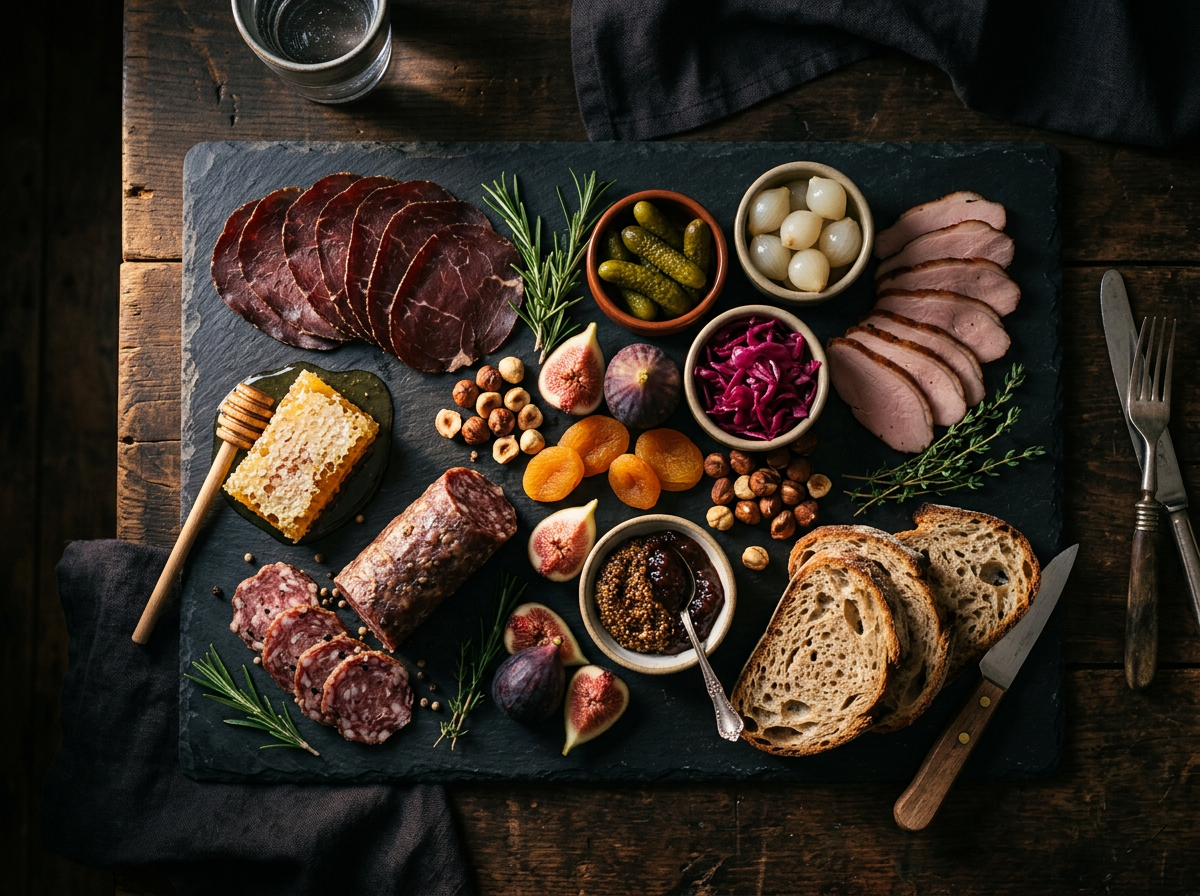
Our Deer Experience workshop takes you through the full field-to-fork journey. Stalk, butcher, cook, and eat - all in one day.
Book a WorkshopI do not expect everyone to agree with me. Hunting is not for everyone, and that is fine. But I do think that if you eat meat, you owe it to yourself to understand where it comes from. To look at the process honestly and decide whether you are comfortable with it. Not in the abstract. Not through a sanitised advert. The actual reality of how an animal becomes food.
I am comfortable with my answer. I hunt the meat I cook because it is the most respectful, sustainable, and honest way I know to put protein on a plate. No middlemen. No hidden supply chains. No pretending. Just a chef who takes full responsibility for every ingredient.
That is what field to fork actually means.
- Cai