Workshops
I get messages every week from people asking the same question: "I want to learn to butcher a deer - where do I start?" The answer used to be complicated. Find a stalker, get permission, hope they will show you. Now the answer is simple: come to one of our workshops.
We run regular workshops at our base in East Sussex covering deer butchery, fire cooking, and whole-animal processing. They sell out every time. And the feedback is always the same - "I wish I had done this years ago." Here is what actually happens when you turn up.
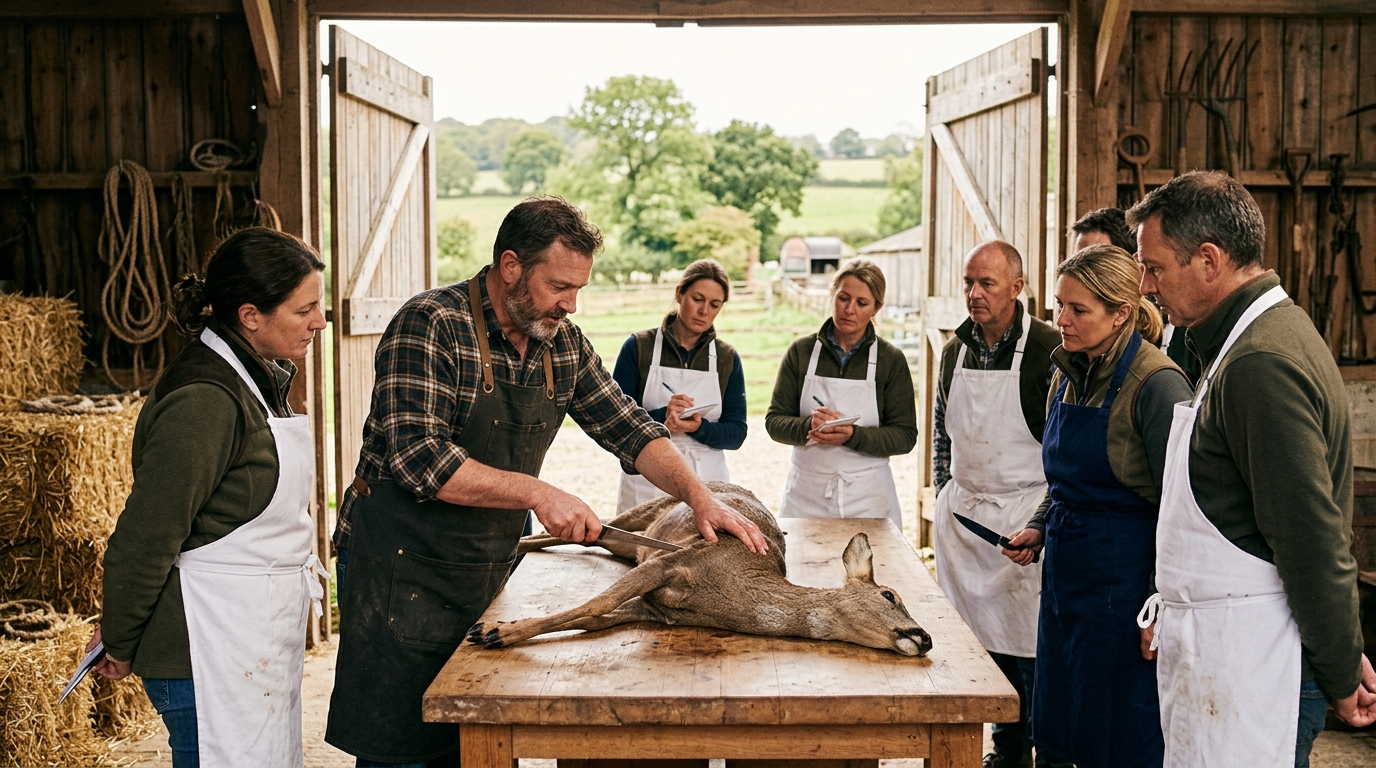
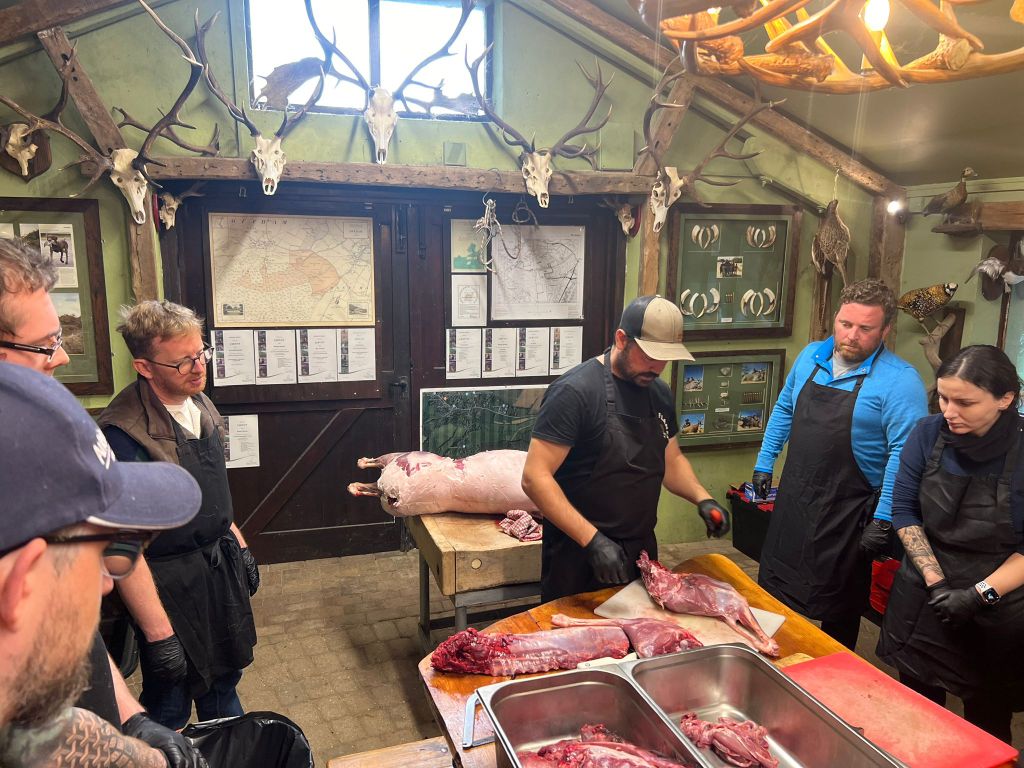
You arrive at 9am. Coffee is on. The fire is already going. And hanging in the larder is a whole deer - typically a fallow doe or young buck sourced from local estates. This is not a sanitised supermarket experience. You are looking at the complete animal, skin on, head attached. For some people this is confronting. For most, it is the whole point.
I start with the context. Where the deer came from. How it was stalked. Why population management matters. The legal framework. The ethical considerations. People are often surprised by how much science and regulation goes into deer management. This is not recreational killing - it is conservation in practice.
Most people have never seen a whole animal before it becomes meat. That disconnect is part of the problem with modern food. When you see where a venison steak actually comes from, you treat it differently. You waste less. You cook it better. You appreciate it more.
- Cai
This is the hands-on part. I demonstrate the full process first - skinning, evisceration, joint breakdown - explaining each step. Then you do it. Every attendee gets knife time on the animal. You learn:
By lunchtime, you will have turned a whole deer into vacuum-packed cuts ready for your freezer. Most attendees go home with 8-12kg of venison. At current retail prices, that alone is worth more than the workshop fee.
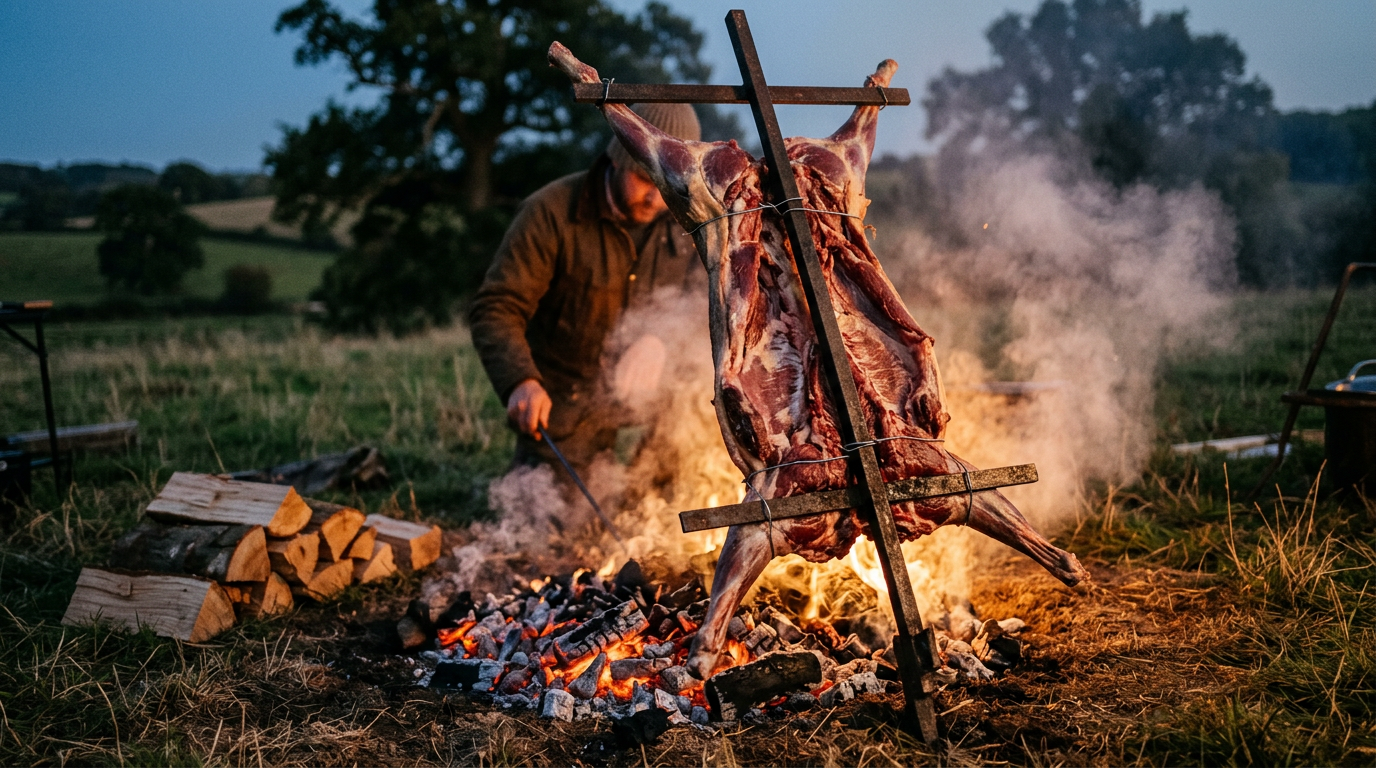
After the butchery, we cook. This is where the fun really starts. I teach fire management - building a proper cooking fire, understanding heat zones, when to use direct versus indirect heat. Then we cook the fresh cuts over the fire. Loin steaks on the plancha. Diced haunch on skewers. Ribs low and slow on the cross.
Everyone eats together. By this point, the group has bonded over shared work and the slightly surreal experience of having just broken down a whole animal. The conversations around the fire are always excellent - people from completely different backgrounds united by curiosity and good food.
The range surprises people. We get:
No experience required. We provide all tools, PPE, and instruction. You just need to be comfortable with the reality that meat comes from animals - and ready to get your hands dirty.
I started running workshops because I believe the disconnect between people and their food is one of the biggest problems in modern eating. When you buy a plastic-wrapped steak from Tesco, you have no idea where it came from, how the animal lived, or how it was processed. That ignorance enables bad farming practices.
When you break down a deer that roamed free on the South Downs, cook it over fire, and share it with a group of strangers who are now friends - something shifts. It is hard to describe but every single person who attends says the same thing: "I will never look at meat the same way again."
Our workshops sell out fast. Check available dates and book your spot.
View Workshop DatesWhether you are a seasoned cook or a complete beginner, a Game and Flames workshop will change the way you think about food. Come hungry, leave with skills, venison, and stories.
See you around the fire.
- Cai