Weddings
The biggest change I have seen in weddings over the past few years is not a menu trend or a service style. It is the size of the guest list. More and more couples are choosing to marry in front of twenty, thirty, forty people instead of a hundred and fifty, and putting the money they save into doing those forty properly.
I love cooking these. A small wedding is where live fire is at its absolute best, and I want to explain why - and be straight with you about the pricing, because that is the part nobody says out loud.
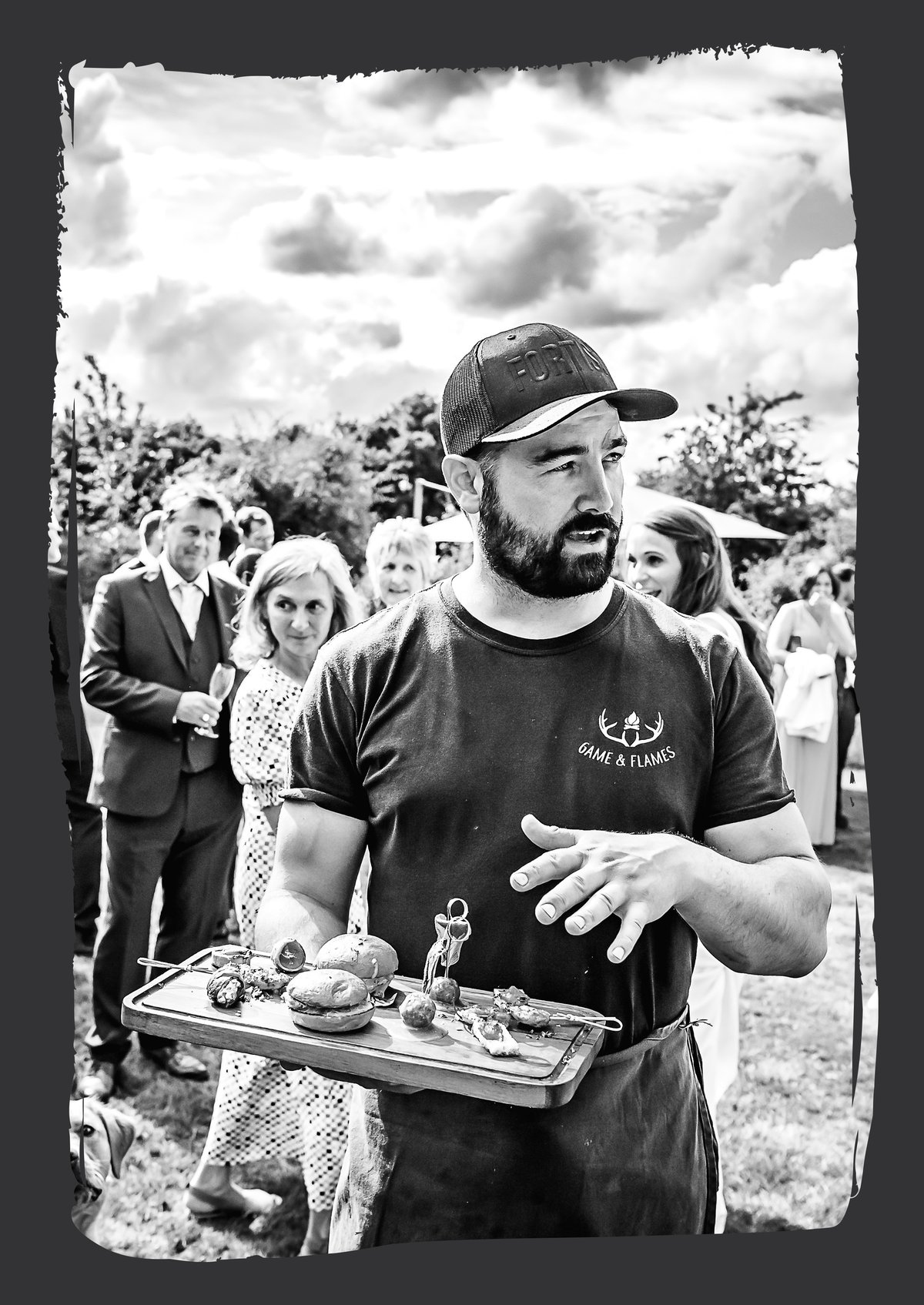
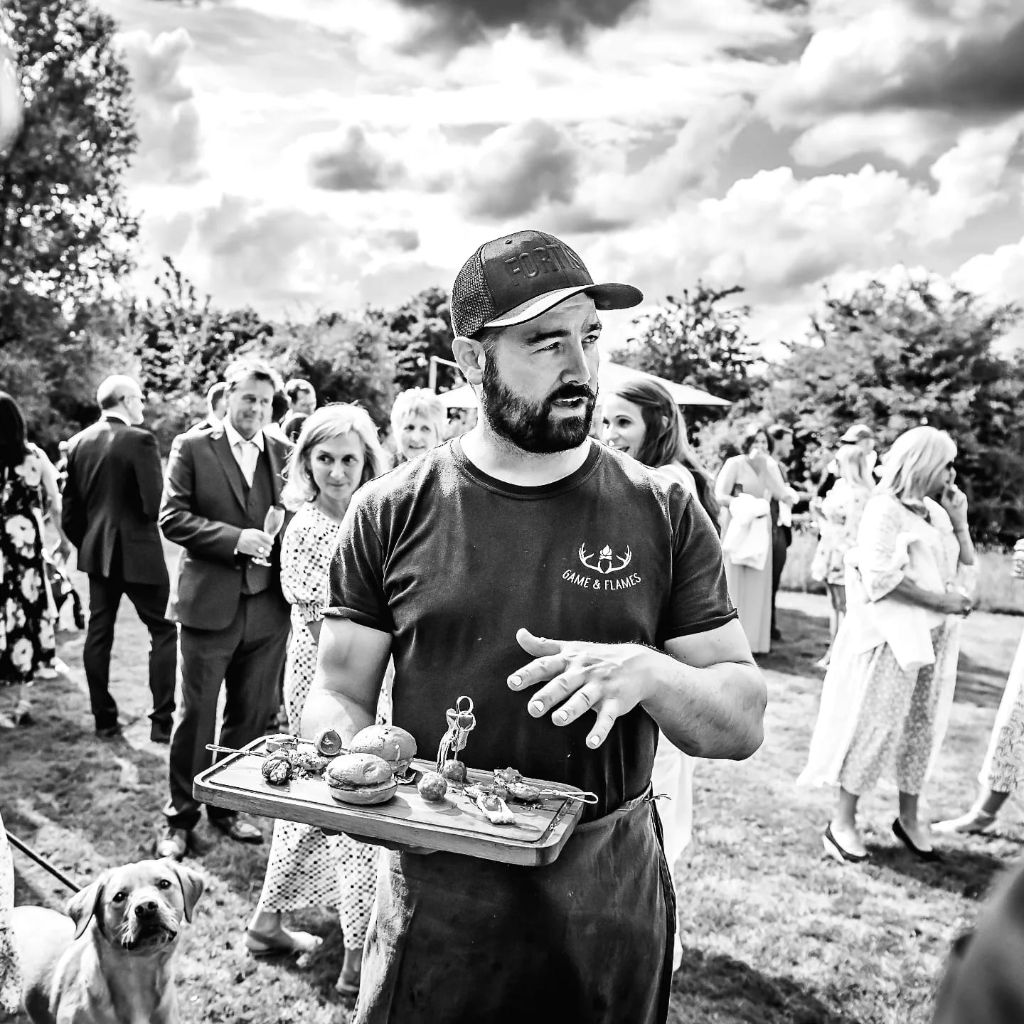
At a hundred and fifty guests, the fire is a spectacle. Wonderful, but it happens over there while you are at your table. At thirty guests, the fire is the room. People stand around it with a drink in hand. They talk to me while I am carving. They ask what the cut is and where the deer came from, and I actually get to tell them.
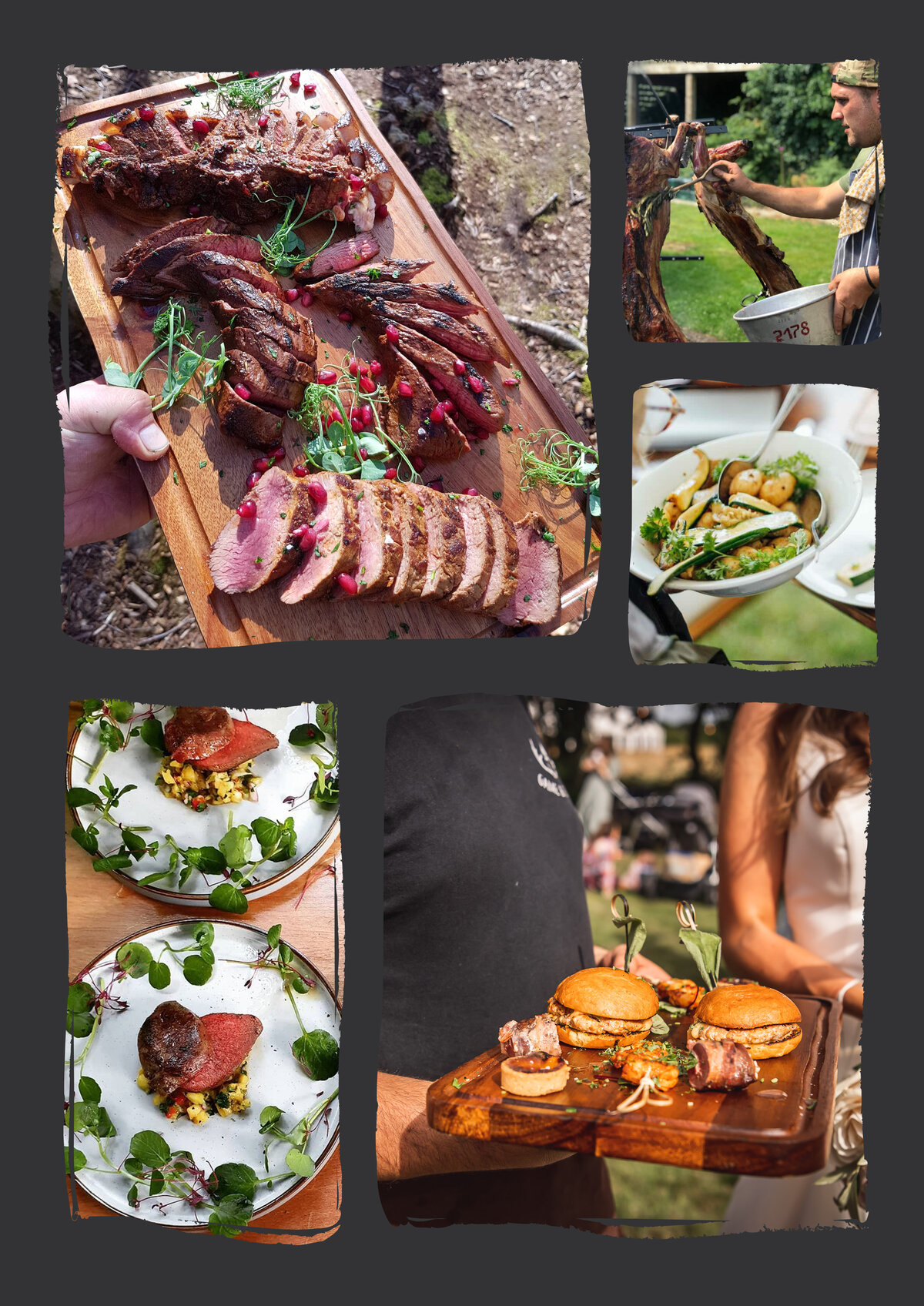
That intimacy is impossible to manufacture at scale. With a small group I can cook things I simply cannot do for a large crowd - individual pieces finished to order, cuts that only yield a few portions, the sort of food that rewards being cooked for a handful of people who are paying attention.
A big wedding is catering. A small wedding is cooking. They are not the same job, and the small one is usually more fun.
- Cai
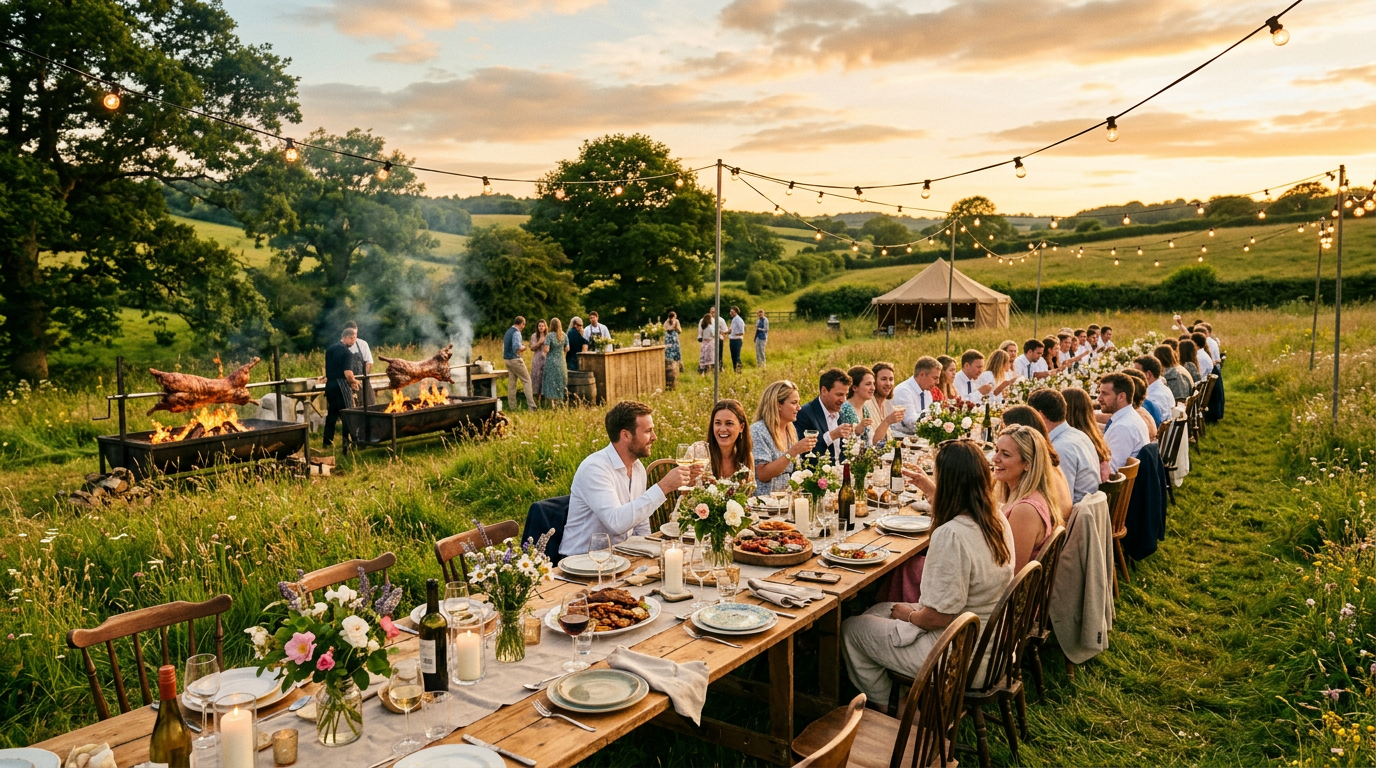
For twenty to fifty guests we usually build the day around one fire rather than several stations. Canapes cooked over the coals while everyone arrives, a centrepiece on the asado cross that gets carved onto sharing boards, seasonal sides done on the plancha alongside it. Everything served family style down one long table, because with these numbers you can actually have one long table.
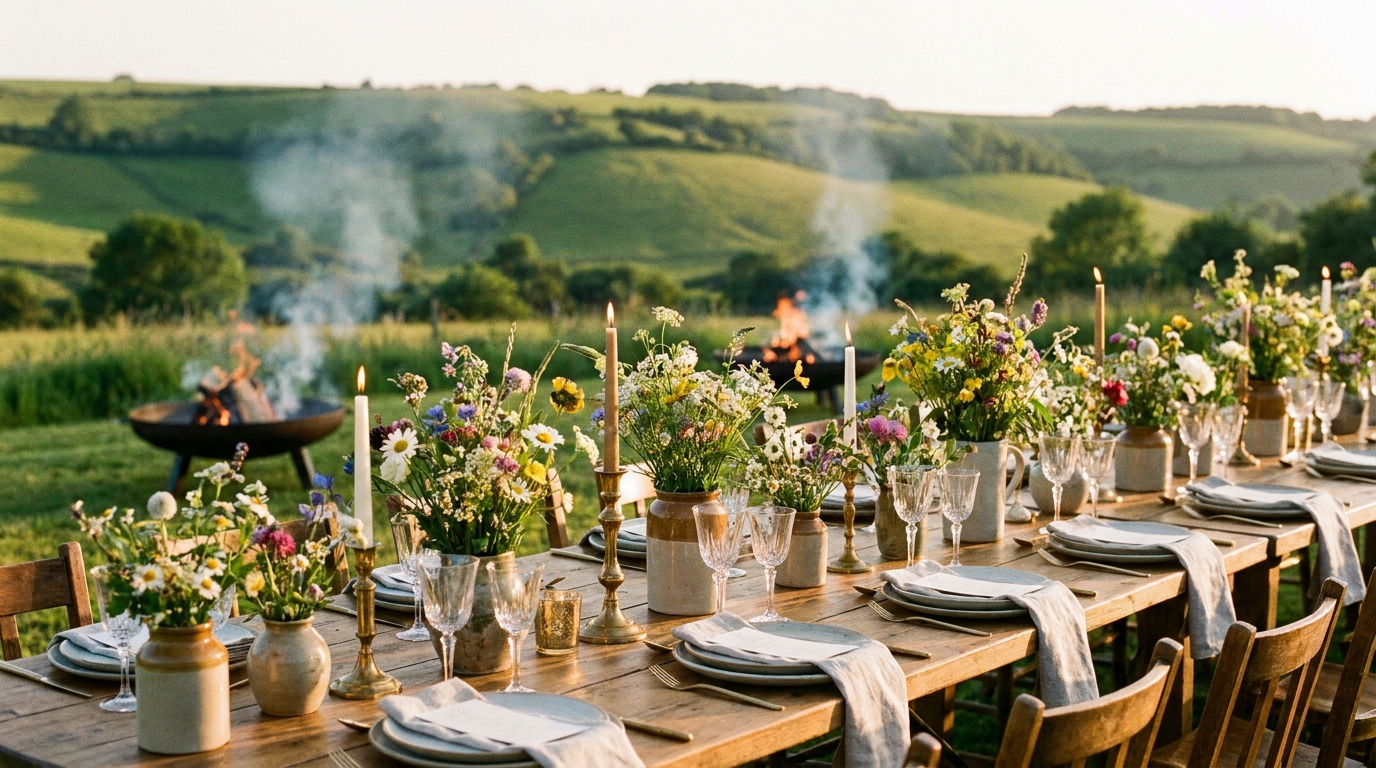
There is no queue. Nobody is eating twenty minutes after the person next to them. The whole thing feels like a very good dinner party that happens to have a wedding attached, which is precisely what most couples booking this size of day are after. If you want the full picture of how a day runs, this walks through it.
Here is the thing people are surprised by: a smaller wedding costs more per head, not less.
It makes sense once you see the shape of a quote. A large chunk of what you are paying for does not change with guest numbers. The van still drives to your venue. The kit still comes off it and gets set up. The fire still takes hours to build and bring to temperature. The team still arrives, and there is a floor below which I cannot send fewer people and still do the job properly. Spread those fixed costs across forty guests instead of a hundred and forty and the per-head figure naturally climbs.
So we apply a surcharge on smaller numbers rather than pretending the maths works out the same. I would rather show you that on the quote than quietly thin the food to hit a headline price. Our breakdown of what live-fire catering costs shows how the parts fit together.
What you get for it is a considerably better dinner than the same budget buys at scale, which is exactly why most couples going small are happy with the trade.
Two things, mostly.
Assuming a small wedding needs less planning. It needs the same conversations about dietaries, timings, power, water and where the fire can safely sit. A field is a field whether there are thirty people in it or three hundred.
Under-catering because the numbers look small. Thirty relaxed guests standing around a fire all afternoon eat considerably more than thirty seated guests working through a plated menu. I would always rather send you home with leftovers.
Do not think of a micro wedding as a scaled-down version of a big one. It is a different kind of day, and the food can carry far more of it. Fewer people means better ingredients, more attention on every plate, and a chef who is actually part of your afternoon rather than a rumour behind a marquee wall.
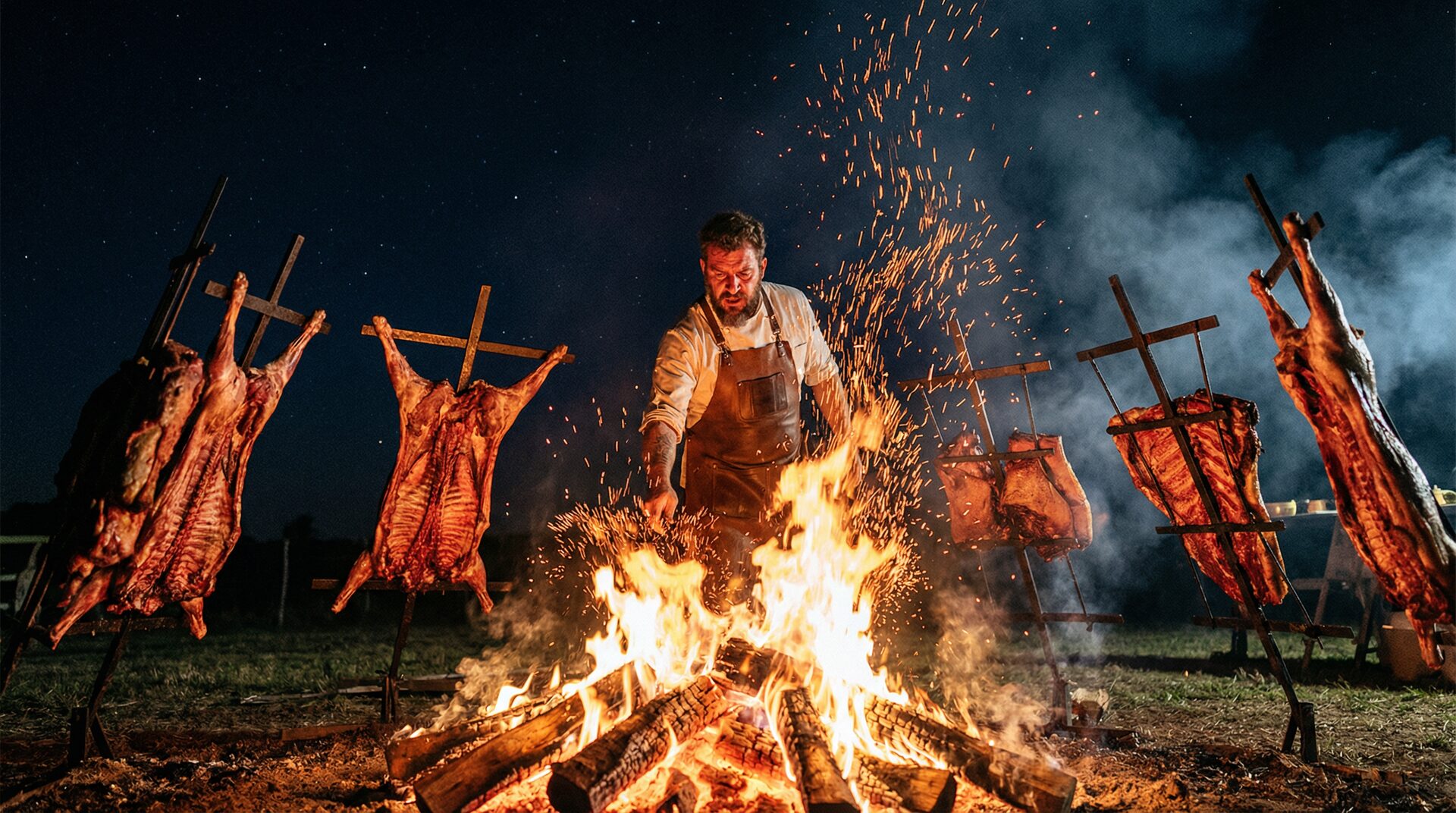
Twenty guests or two hundred, the cooking is the same standard. Tell us your numbers and we will build something around them.
Get a Free QuoteSmall weddings are not a compromise. Done well they are the best food I cook all year, and the couples who choose them almost never wish they had invited more people.
- Cai