Technique
This is the fire cooking equivalent of the gas vs electric hob debate. Except both sides are wrong. Or both sides are right. Depends who you ask and what they are cooking.
I have been cooking over fire professionally for over a decade, and I use both charcoal and wood at virtually every event. Not because I cannot make up my mind, but because they do different things. Understanding what each fuel brings to your fire is one of the most important skills in outdoor cooking - and most people get it completely wrong.
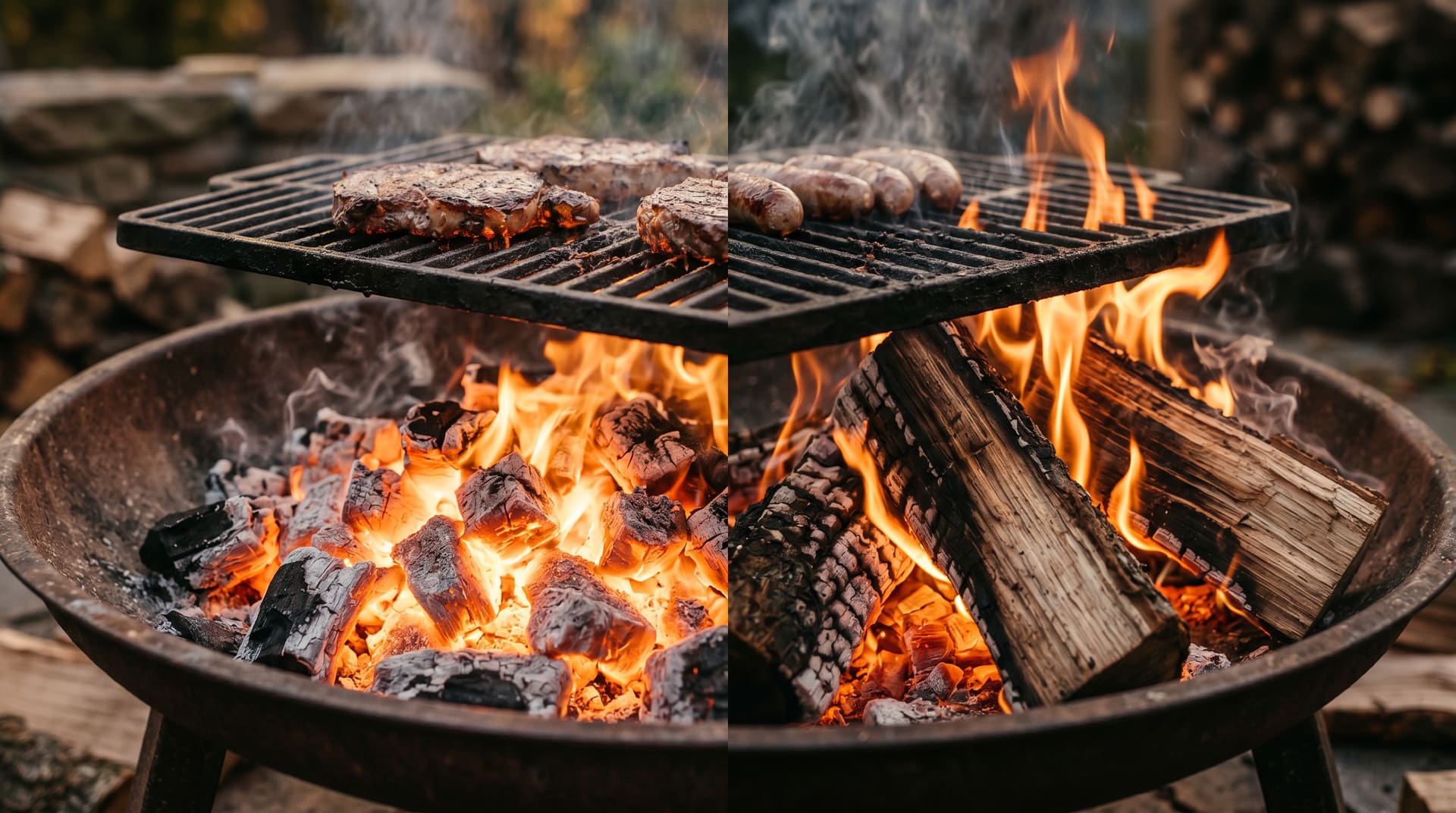
Charcoal is wood that has already been burned. That sounds simplistic, but it matters. When you make charcoal, you heat wood in a low-oxygen environment until the moisture and volatile compounds burn off. What remains is almost pure carbon. This is why charcoal burns hotter, cleaner, and more consistently than raw wood.
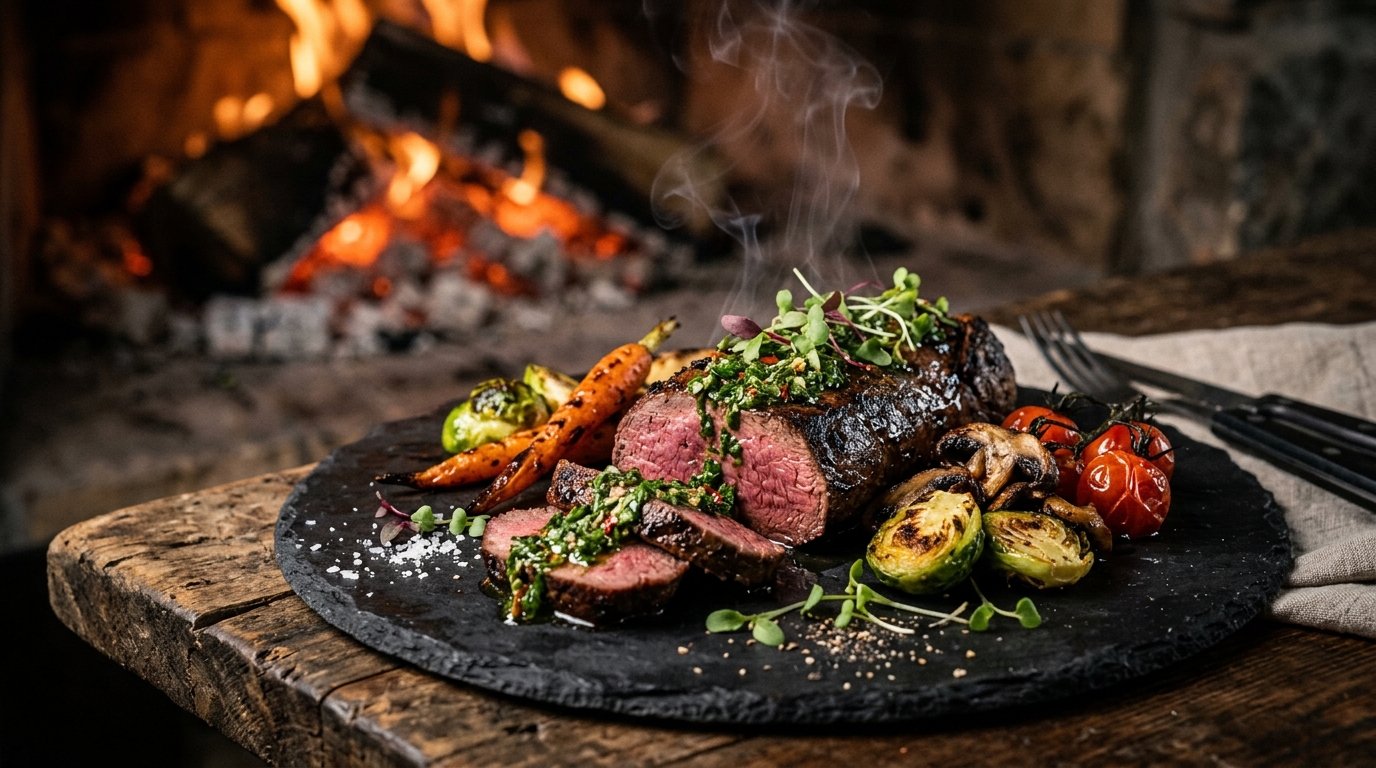
Good quality restaurant-grade lump charcoal - which is all we use - burns at around 600-700 degrees Celsius. It produces minimal smoke, throws very little flame, and gives you a stable, predictable heat source that you can control with air flow. For searing venison steaks on the plancha, for cooking delicate fish, and for any situation where you need precise temperature control, charcoal is unbeatable.
What charcoal does not give you is flavour. Or rather, it gives you heat flavour - the Maillard reaction, the caramelisation, the char - but it does not add smoke character. A steak cooked over charcoal tastes seared and charred. A steak cooked over wood tastes smoky. Different things entirely.
Wood is alive in a way that charcoal is not. It still contains moisture, resins, sugars, and volatile organic compounds. When it burns, those compounds are released as smoke - and that smoke is where the flavour lives.
Different woods produce different smoke profiles:
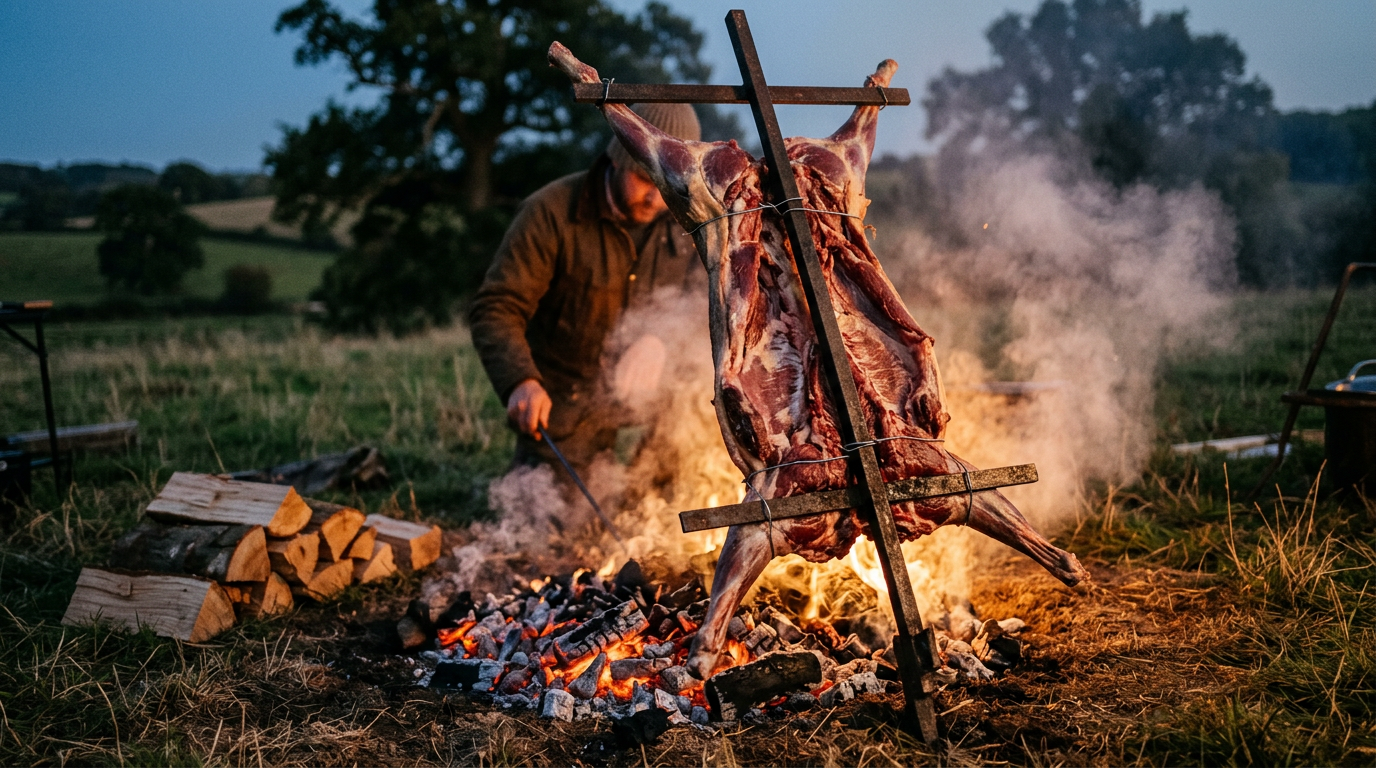
The trick is knowing that wood burns unevenly. It flames, then settles, then flares again as different parts catch. You get hot spots and cool spots. For a whole animal on the Argentine cross cooking for four to six hours, this variability is actually desirable - it creates layers of flavour across the carcass. The shoulder, closer to the flames, gets deeper char. The loin, further away, stays pink and tender with gentle smoke.
People talk about charcoal and wood like you have to pick a side. You do not. They are tools. A good carpenter does not choose between a hammer and a screwdriver - he uses both. Same principle.
- Cai
At a typical wedding or corporate event, our setup looks like this:
The Argentine cross runs on wood. Always oak, sometimes with cherry or apple mixed in. The whole deer or lamb needs that long, slow exposure to wood smoke. It is not just about heat - it is about building flavour over four to six hours. The smoke is doing as much work as the fire.
The planchas run on charcoal. These are our high-heat searing surfaces. Canapes, steaks, fish, halloumi - anything that needs to go from raw to perfect in 90 seconds needs consistent, controllable, screaming-hot heat. Charcoal delivers that without the flame variability of wood.
The fire pit uses a mix. For things like whole cauliflowers in the embers, bone marrow, and fire-roasted vegetables, we use a blend. Charcoal as the base for steady heat, with chunks of oak or apple wood thrown on top for smoke infusion. Best of both worlds.
Whatever fuel you use, it has to be quality. We use sustainably sourced British lump charcoal - not briquettes, which are full of binders, accelerants, and fillers that taint the food with chemical flavours. And we use seasoned hardwood - kiln-dried or air-dried for at least twelve months. Wet wood produces bitter, acrid smoke that ruins food.
If you take one thing from this article, let it be this: the quality of your fuel determines the quality of your fire, which determines the quality of your food. There are no shortcuts. Bad charcoal makes bad food. Green wood makes bad food. Get the fuel right and everything else follows.
Our hands-on workshops teach you everything from fire management to butchery to plating.
View WorkshopsSo charcoal or wood? Both. Always both. The question is not which one to use - it is which one to use for what. Get that right and your fire cooking will take a massive step forward.
And if you want to see the difference in person, come to an event. Watch the cross. Watch the plancha. Taste the difference. Then tell me one is better than the other.
You will not be able to.
- Cai