Behind the Scenes
Last Saturday, I cooked for 180 guests at a barn wedding in the South Downs. It was one of our best events this year. The couple were thrilled. The guests were raving. The reviews are already coming in. But nobody saw what happened before the first guest arrived. So let me show you.
My alarm goes off at 3am. Not because I enjoy it. Because a whole fallow deer needs six hours on the cross, and if the ceremony is at 1pm, the maths is non-negotiable. I check the weather forecast one last time - 18 degrees, light breeze from the southwest. Perfect. I load the van in the dark: crosses, planchas, fire pits, tools, charcoal, wood, and the cool boxes with all the prep we did yesterday.
The prep is its own story. Friday was a 14-hour day. We broke down the whole deer into the cuts for the cross. We marinated venison steaks for the plancha. We made chimichurri, dressed salads, prepped every garnish and accompaniment. By 10pm Friday, the walk-in fridge looked like a battlefield. By midnight, it was spotless and everything was boxed and labelled for transport.
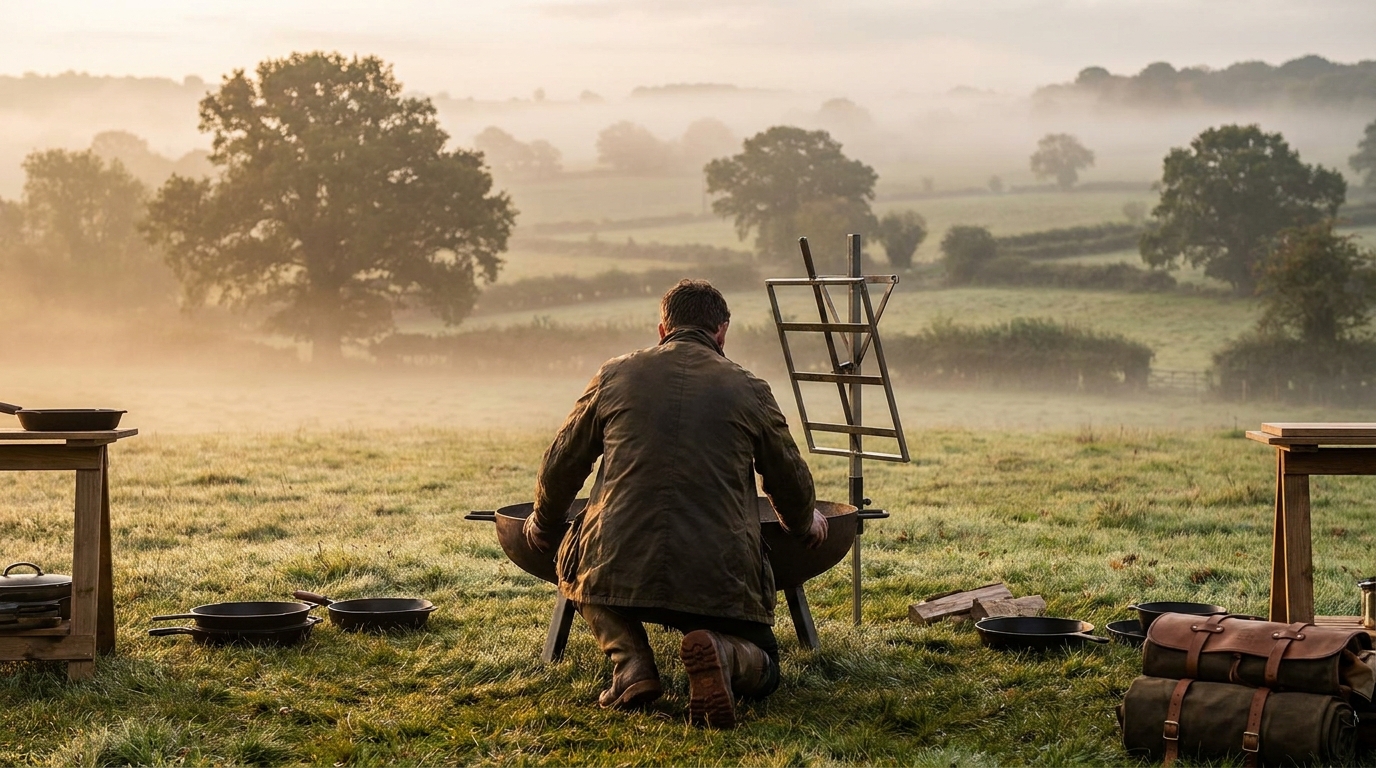
We arrive at the venue in the dark. Two of us today - me and one of my regular team. First job: assess the site. Where is the wind coming from? Where will the smoke drift? Where will the guests be standing during drinks? You get one chance to position the fire correctly. Move it later and you waste two hours.
The Argentine cross goes up first. It takes 20 minutes to assemble and anchor. The fire pit gets built alongside it - a bed of hardwood logs that will burn down to embers over the next two hours. The plancha station goes 5 metres away for canape service later. By 5am, the first fire is lit.
There is a moment just before dawn when the fire catches properly and the first real heat starts to build. The air smells of oak smoke and damp grass. Nobody is around. No guests, no music, no stress. Just the fire and the work ahead. It is my favourite moment of any event.
- Cai
By 6am, the embers are ready. The whole deer - butterflied and secured to the cross frame - gets positioned at a 70-degree angle, about 60cm from the heat source. From this moment, I do not leave the fire. The angle, distance, and heat need constant adjustment as the embers shift and the wind changes.
For the next five hours, I manage the fire. Adding charcoal. Raking embers. Rotating the cross. Checking internal temperature with a probe thermometer. The target is 54C in the thickest part of the haunch - medium-rare throughout. Go past 60C and you have lost the battle.
The team member handles the cold prep while I manage the fire. Salads dressed. Bread sliced. Sauces portioned. The plancha gets fired up for canape service - it needs 30 minutes to reach temperature. I do a comms check with the wedding coordinator: ceremony at 1pm, drinks reception at 1:30, canapes from 1:30 to 3pm, seated at 3:15.
The venue staff start setting up tables and chairs. The florist arrives. The band does a sound check. And all the while, 30 kilograms of venison is slowly becoming the best thing these guests have ever eaten.
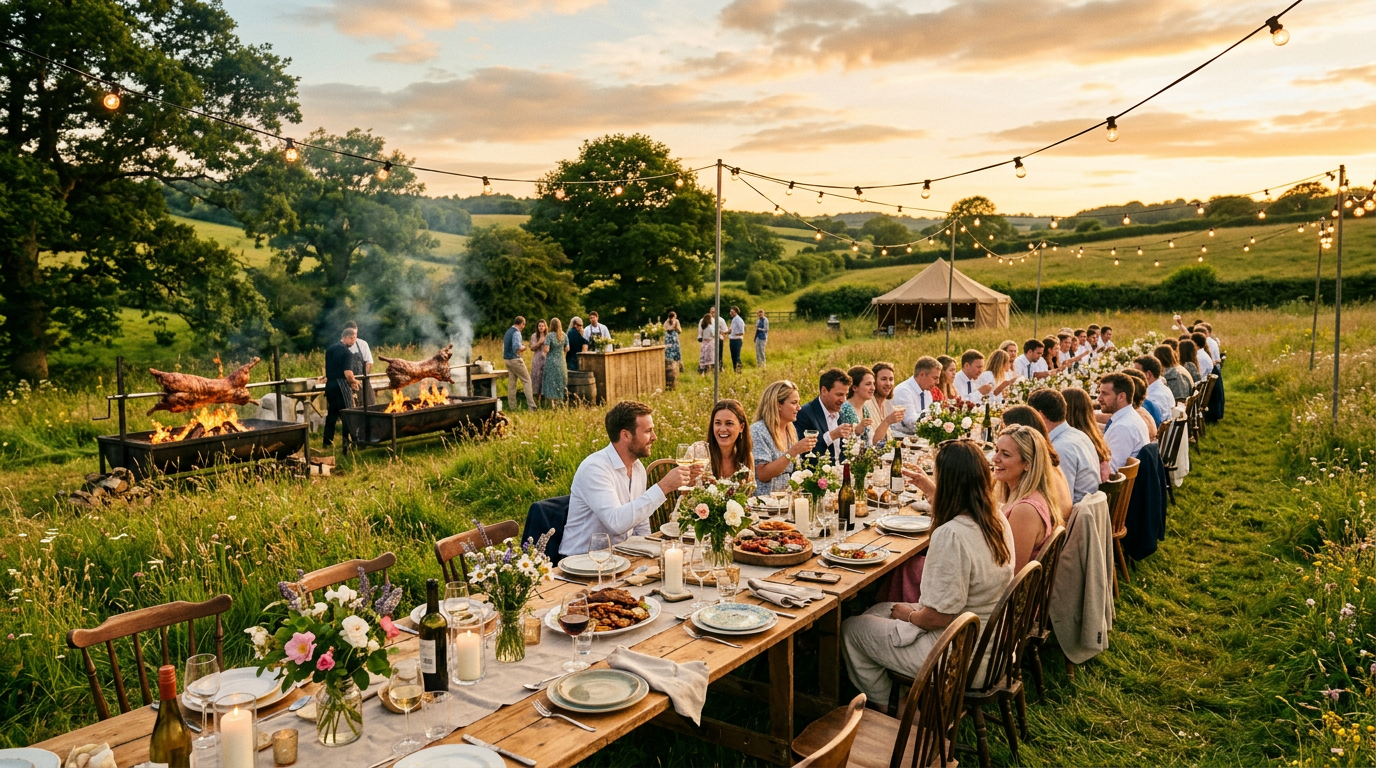
Guests emerge from the ceremony. The first thing they see is smoke rising from the fire. The first thing they smell is roasting venison. This is not an accident - we position the cooking to maximise the sensory impact at exactly this moment. It is theatre, and it works every time.
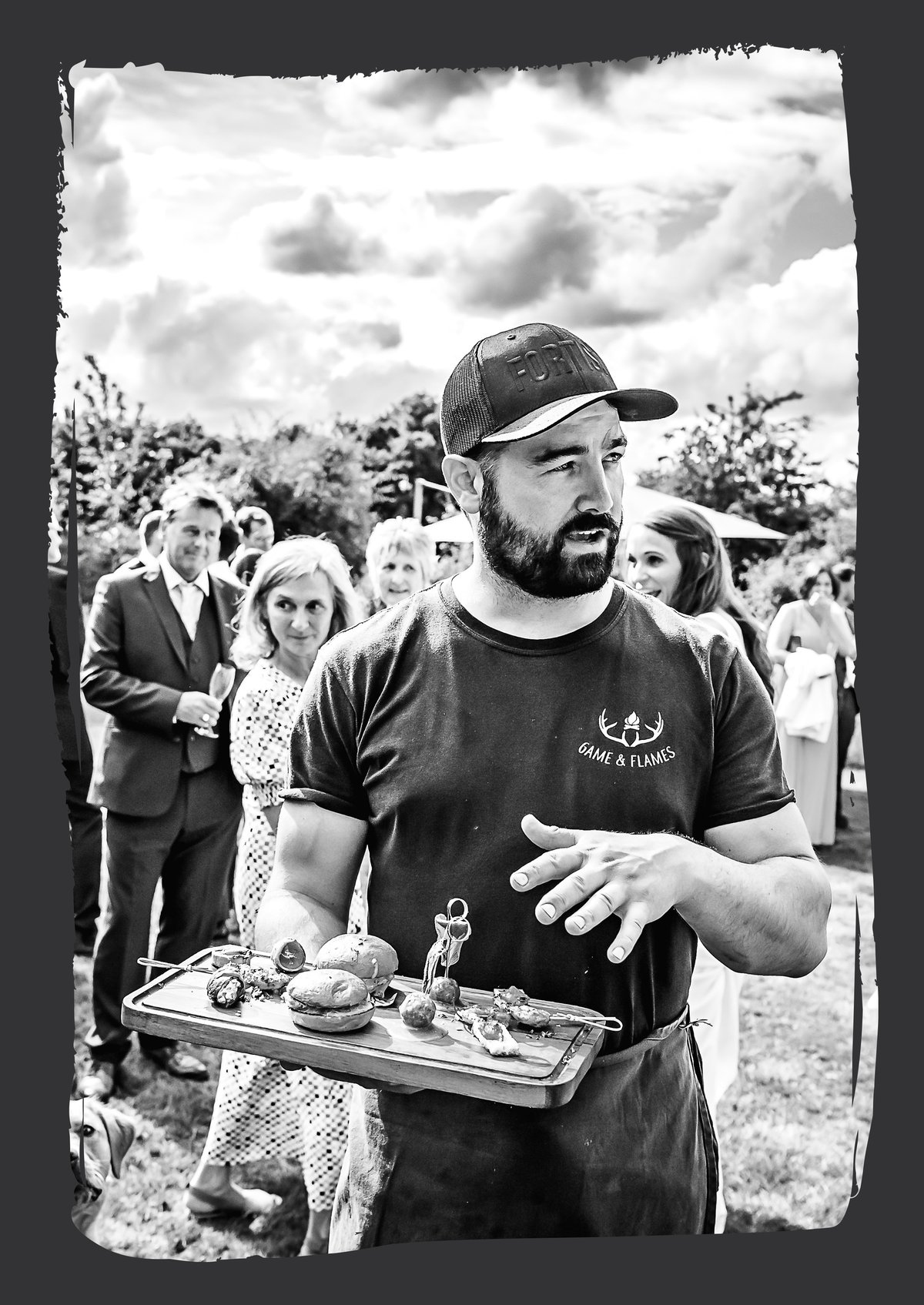
Canapes go out fast: pigeon poppers, smoked trout blinis, halloumi skewers. The team member circulates with trays while I stay at the fire. Guests drift over. They ask questions. They take photos. I explain what is happening with the deer. One guest tells me he is a chef and asks about the wood mix. Another asks if I sell venison. A child asks if she can touch the fire. I say no.
The deer comes off the cross at 3pm - exactly on schedule. Internal temp: 55C in the haunch, 52C in the loin. Perfect. It rests for 15 minutes under a foil tent while we fire the plancha for the vegetarian mains and the starters go out.
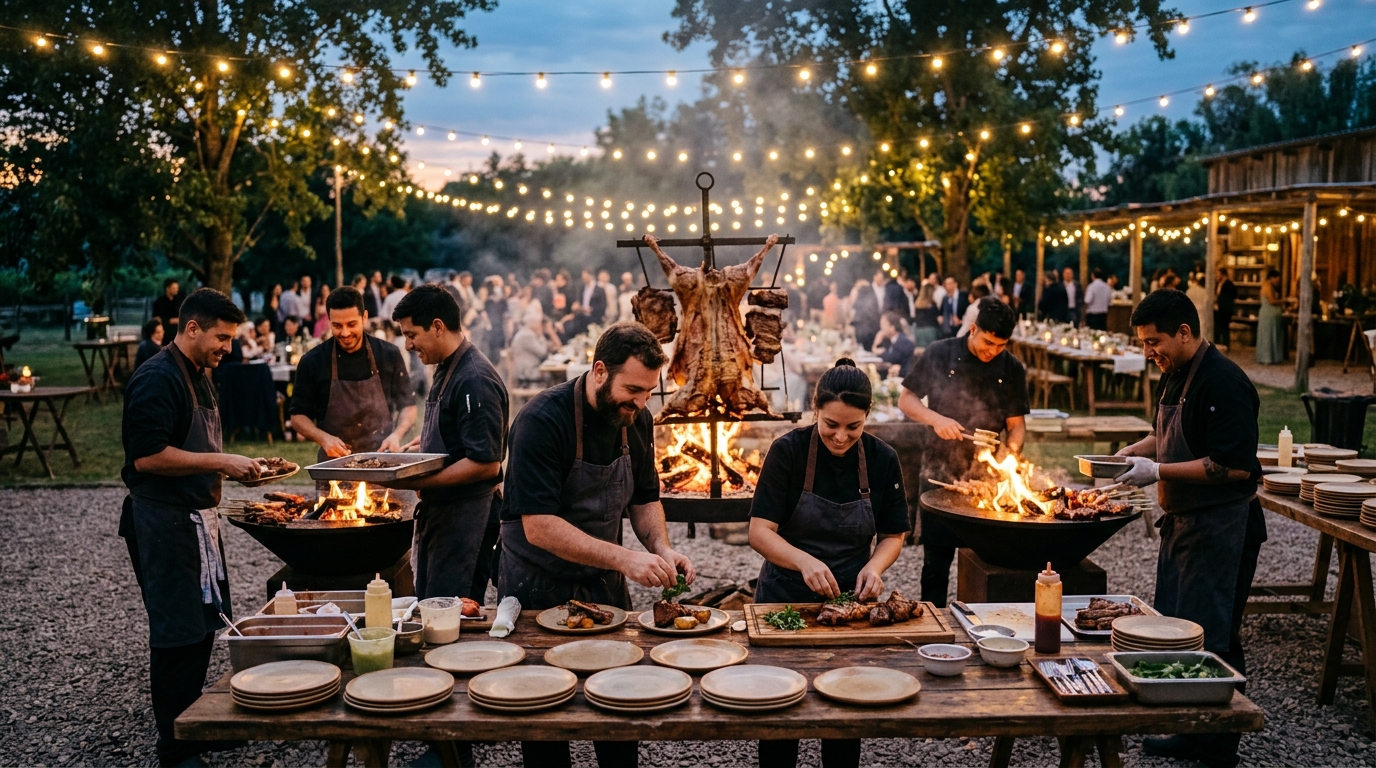
Then the carving. This is the moment. I carry the whole deer to the carving station in full view of the guests. The room goes quiet, then erupts. Phones come out. The best man makes a joke. I carve the haunch in long, clean slices - pink, juicy, steaming. The loin comes off in medallions. The shoulders get pulled. Nothing is wasted.
Service takes 90 minutes for 180 guests. Three courses, all fire-cooked. The kitchen (such as it is - three trestle tables behind a gazebo) is controlled chaos. But from the guests' side, it looks effortless. That is the goal.
Guests are dancing. We are scrubbing planchas, dismantling crosses, packing the van, and disposing of ash safely. A full event breakdown takes two hours. We leave the site cleaner than we found it - no ash marks, no grease stains, no trace. By 8pm, we are driving home. I will be asleep by 9pm. The alarm will not go off at 3am tomorrow. Small mercies.
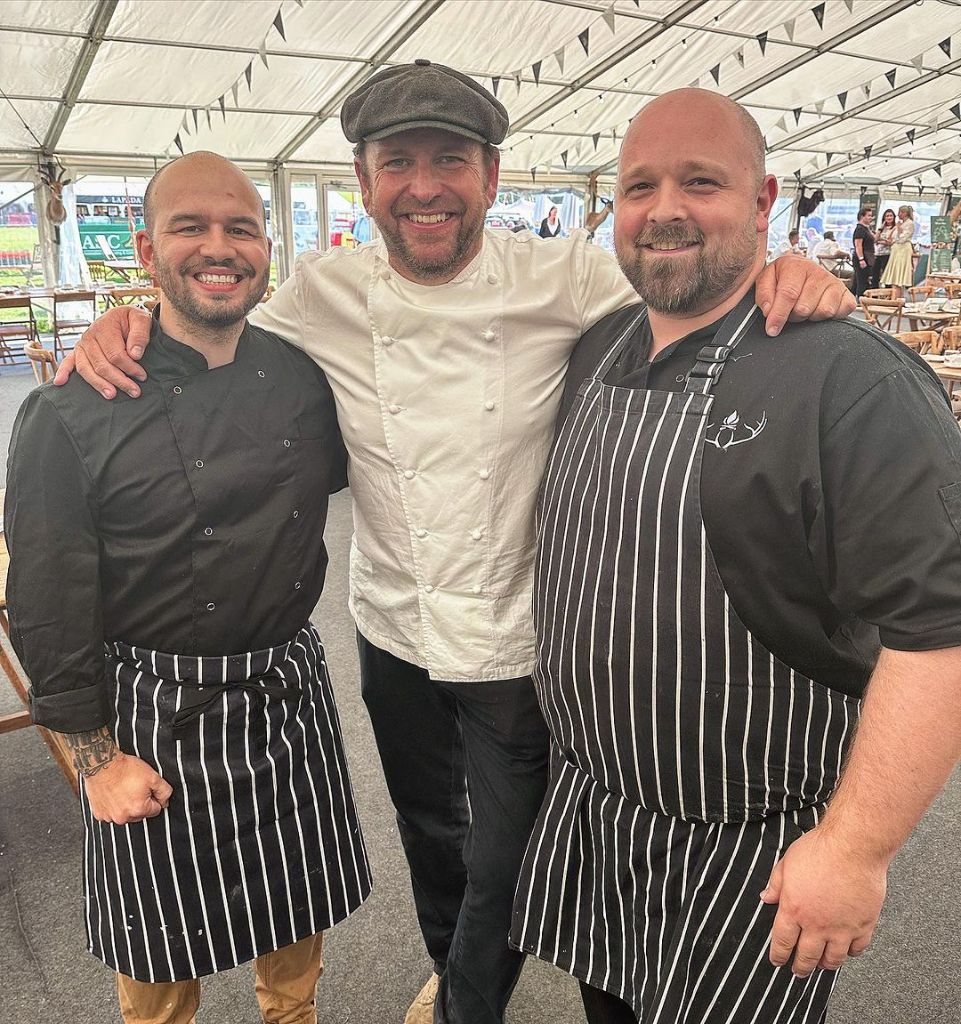
From weddings to corporate events, every occasion gets the same level of dedication and craft.
Get a Free QuoteThat is a day in my life. Eighteen hours from alarm to sleep. Physical, demanding, occasionally painful. And I would not swap it for anything, because there is no better feeling than watching 180 people eat food you have been cooking since before dawn, and knowing every single bite was worth the effort.
- Cai